
Union and dialogue through ecumenism at the 5th Ecumenical Conference 2023
25 de October de 2023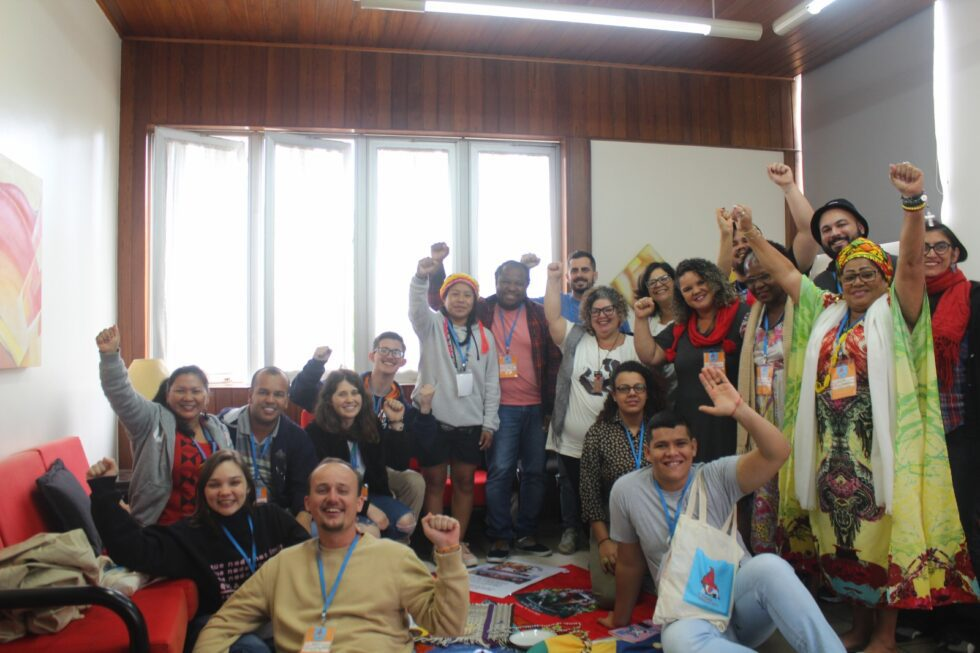
The 5th Ecumenical Conference promoted meetings between various faiths towards a world with less fundamentalism and gender violence
The word Ubuntu, from South African philosophy, means union, solidarity. And this was the great driver of the 5th Ecumenical Conference 2023, on the theme “I am because we are” – Ubuntu – “We, though many, form one body, and each member belongs to all the others” (Romans 12:05) – Against fundamentalism and for gender justice.”
Between 12 and 15 October, more than 150 representatives from social movements and faith communities came together in Vargem Grande Paulista (São Paulo state) to debate the consequences of religious fundamentalism in Latin America and the Caribbean. Discussions made particular reference to violence against women, gender diversities and religious racism, particularly against African-origin religions.
Workshops: dialogue for ecumenism
CESE ran two workshops at the conference. The first was “How religious fundamentalism affects the lives of women and the LGBTQIAPN+ population in the Amazon and the Cerrado,” while second was called “Faith and Resistance: the struggle of peoples from the Amazon and the Cerrado against religious racism in their territories.” The workshops were facilitated by CESE invitees who shared their experiences. These included Amilton Gonzaga, from the National Coordination for the Coalition of Black Rural Quilombola Communities (Coordenação Nacional de Articulação de Quilombos: CONAQ), who outlined how quilombola territories are affected by fundamentalism; Breno Vinícius from SOMAR in Rondônia, who discussed violence against the LGBT population; Sandriele Kaiowá and Jaqueline Aranduhá from Kuñangue Aty Guasu, the Great Assembly of Guarani and Kaiowá Women in Mato Grosso do Sul; Isabela Dessan from the Alto Rio Negro Indigenous Women’s Association and Mother Nilda de Oxum, an Umbanda leader from Porto Velho in Rondônia state.
Bianca Daébs, CESE advisor for ecumenicalism and inter-religious dialogue, discussed the tone of the event: “The conference addressed religious fundamentalism and gender equity. These are two important areas for the ecumenical movement, because, in a concrete way, fundamentalism exacerbates violence against women, the LGBTQIAPN+ population, traditional peoples and communities, and people from the worship houses. When we start with this inter-religious perspective, it develops into a training process. There is nothing more important that producing quality information in the exercise of communion and reciprocity. Mutual respect was at the centre of the conference; this is of fundamental importance for a dignified life for all.”
Supporters









Networks