“Fraternity and Integral Ecology” theme of Roundtable Dialogue with Marcelo Barros
06 de March de 2025
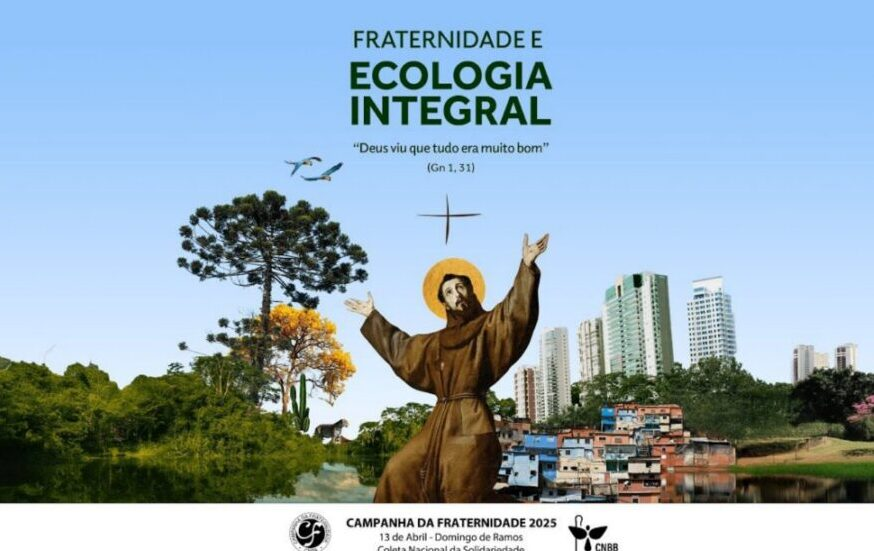
On Thursday February 20, the Ecumenical Coordination of Service (Coordenadoria Ecumênica de Serviço: CESE) hosted a Roundtable Dialogue on “Fraternity and Integral Ecology”, the theme of the 2025 Fraternity Campaign. The event was attended by theologian and biblical scholar Marcelo Barros, who shared his reflections on the relationship between fraternity and caring for our common home.
During the discussion, Barros emphasized the importance of integral conversion in the face of the socio-environmental crisis we are experiencing and in light of COP 30, which will be held in Belém in the state of Pará.
He invited us to reflect on how our actions impact the environment and future generations, and how important it is to adopt practices that promote social and environmental justice. He pointed out the importance of seeing indigenous and African spiritualities as examples of integrity. The event was an initiative of the Bahia Ecumenical Council of Christian Churches (Conselho Ecumênico Baiano de Igrejas Cristãs: CEBIC), the Ecumenical Coordination of Service (Coordenadoria Ecumênica de Serviço: CESE), Caritas Northeast Brazil and the Ecumenical Centre for Biblical Studies in Bahia (Centro Ecumênico de Estudos Bíblicos: CEBI Bahia) for the construction of a fairer and more sustainable future.
The motto of the 2025 Fraternity Campaign is “God saw that everything was very good” (Gen 1:31).
SEE WHAT THEY SAY ABOUT US
You have to praise CESE’s capacity to find answers so as to extend support to projects from traditional peoples and communities, from family farming, from women; its recognition of the multiple meanings of the right to land, to water and to territory; the importance of citizenship and democracy, including environmental racism and the right to identity in diversity in its discussion agenda, and its support for the struggles and assertion of the values of solidarity and difference.
When we hear talk of the struggles of the peoples of the waters, of the forests, of the semi-arid region, of the city peripheries and of the most varied organizations, we see and hear that CESE is there, at their side, without replacing the subjects of the struggle. Supporting, creating the conditions so that they can follow their own path. It is this spirit that we, at ASA, want you to maintain. We wish you long life in this work to support transformation.
In the name of historical and structural racism, many people look at us, black women, and think that we aren’t competent, intelligent, committed or have no identity. Our experience with CESE is different. We are a diverse group of black women. We are in varied places and have varied stories! It’s important to know this and to believe in us. Thank you CESE, for believing in us. For seeing our plurality and investing in us.
CESE was set up during the most violent year of the Military Dictatorship, when torture had been institutionalized, when arbitrary imprisonment, killings and the disappearance of political prisoners had intensified. The churches had the courage to come together and create an institution that could be a living witness of the Christian faith in the service of the Brazilian people. I’m so happy that CESE has reached its 50th anniversary, improving as it matures.
I am a macumba devotee, but I love being with partners whose thinking is different from ours and who respect our form of organization. CESE is one such partner: it helps to build bridges, which are so necessary to ensure that freedom, diversity, respect and solidarity can flow. These 50 years have involved a lot of struggles and the construction of a new world.
Over these 50 years, we have received the gift of CESE’s presence in our communities. We are witness to how much companionship and solidarity it has invested in our territories. And this has been essential for us to carry on the struggle and defence of our people.